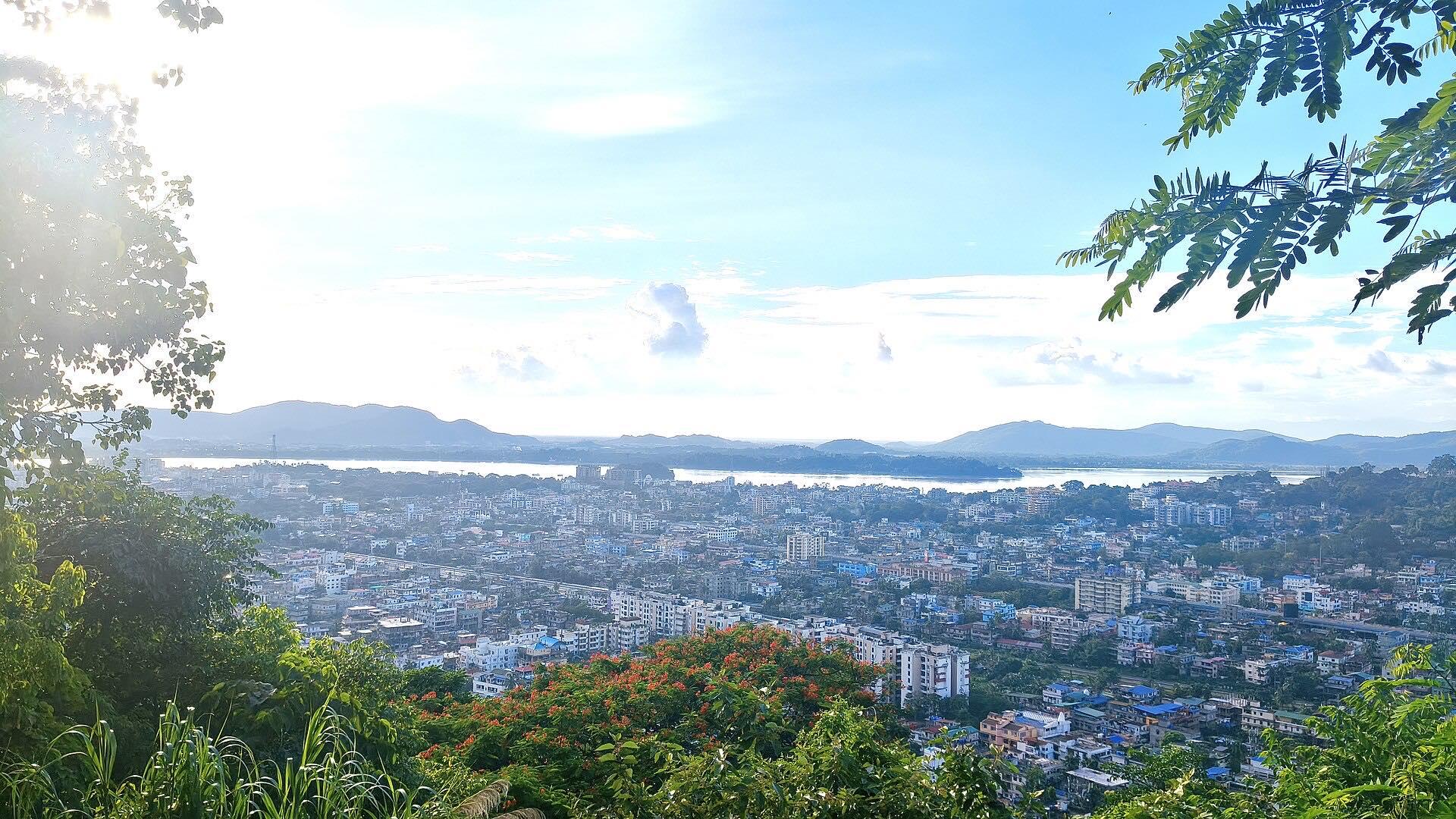
Guwahati has more sacred ground per square kilometre than any city its size in India, and visitors see one temple of it. Here are ten, in the order we would actually do them, with the ones that take a ferry or a drive at the end.
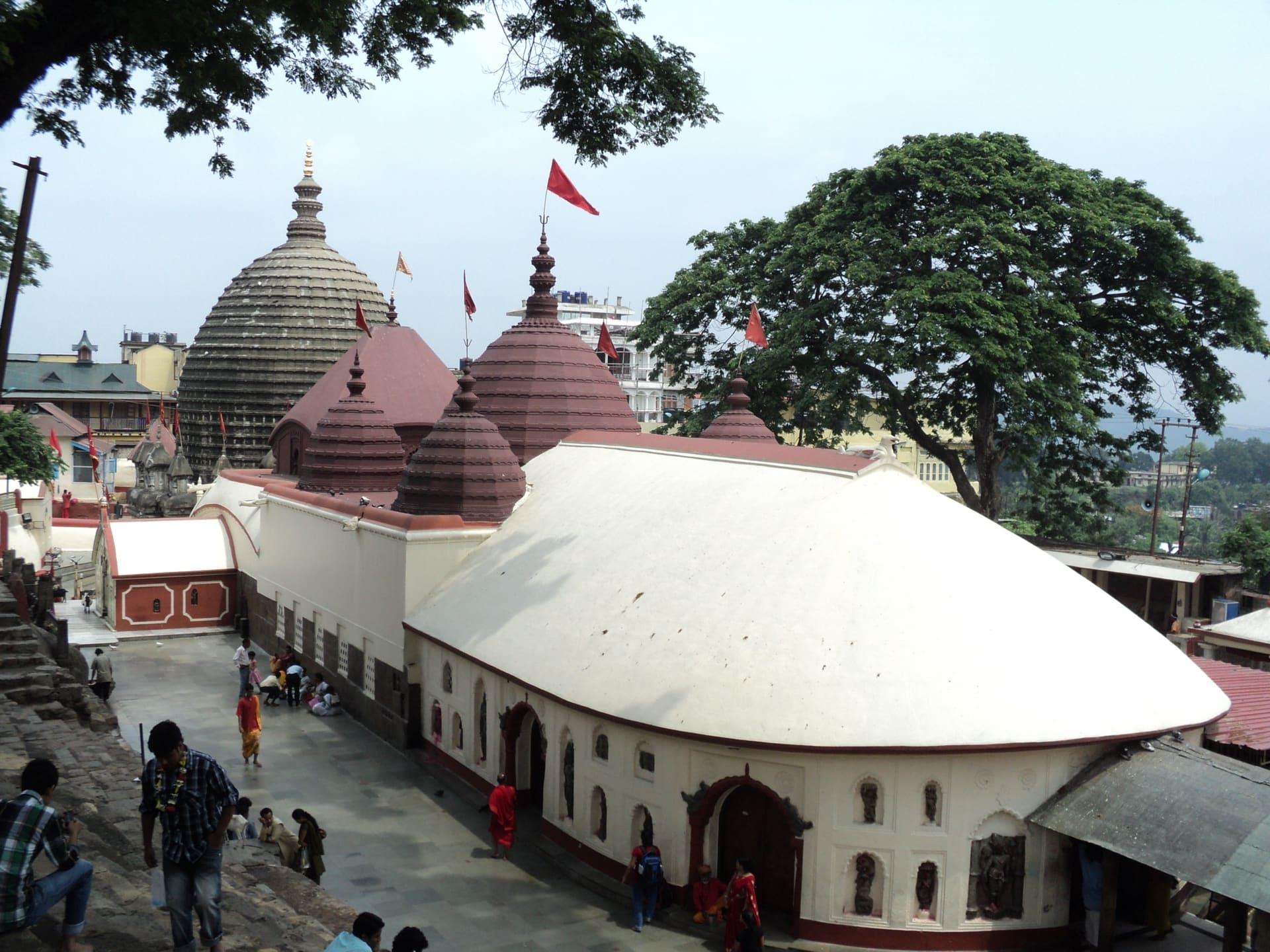
1. Kamakhya, on the Nilachal hill
The reason most people come. One of the most important Shakti Peethas in the country, and unusual even among those: there is no idol in the sanctum, only a natural spring in a cave, and the goddess is worshipped as the yoni. It draws something like forty lakh pilgrims a year.
Go early, and go with a pass. The general queue can take hours on an ordinary day and most of one on a festival day; the VIP darshan is not a luxury so much as the difference between seeing the temple and standing in a line beside it.
2. Umananda, on the island in the river
A Shiva temple on Peacock Island in the middle of the Brahmaputra, often described as the smallest inhabited river island in the world. You get there by ferry from Kachari ghat, which takes ten minutes and is half the point.
There are golden langurs on the island, which exist in very few other places. The climb up from the jetty is short but it is steps, so this is the one to think twice about with elderly travellers.
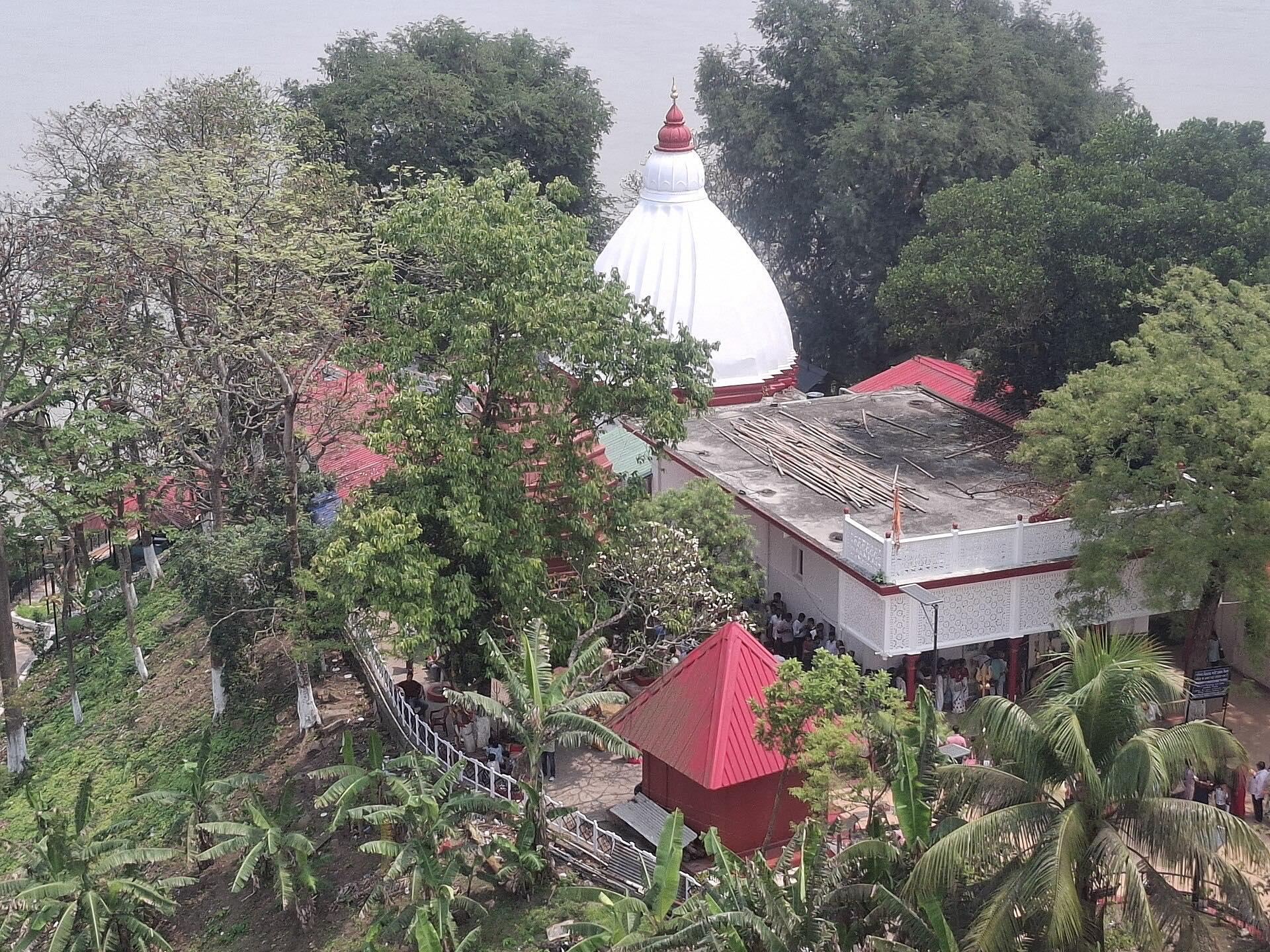
3. Navagraha, on Chitrachal hill
Dedicated to the nine planets, and a direct link to the city that used to be called Pragjyotishpura - a centre of eastern astronomy and astrology. Nine lingams under a red dome, each for a planet.
It is five minutes from the middle of town and almost nobody is ever there.
4. Basistha, at the spring
An ashram on the southern edge of the city where three hill streams meet, said to be the hermitage of the sage Vasistha. The temple is eighteenth-century, built under an Ahom king; the setting is older than any of it.
Come for the water rather than the architecture. It is the coolest place in Guwahati in May.
5. Ugratara, in the old city
Beside the Jor Pukhuri tanks in Uzan Bazar, a Shakta temple where, as at Kamakhya, there is no image in the sanctum - here a water-filled pit. Ahom-built in the late seventeenth century.
Two minutes from the riverfront, and easy to pair with Sukreswar.
6. Sukreswar, on the riverbank
A Shiva temple on Itakhuli hill right on the south bank, with one of the largest Shiva lingams in the region and a flight of steps down to the water. Best at dusk, when the ghat below it fills up and the river goes the colour of tin.
7. Doul Govinda, across the water
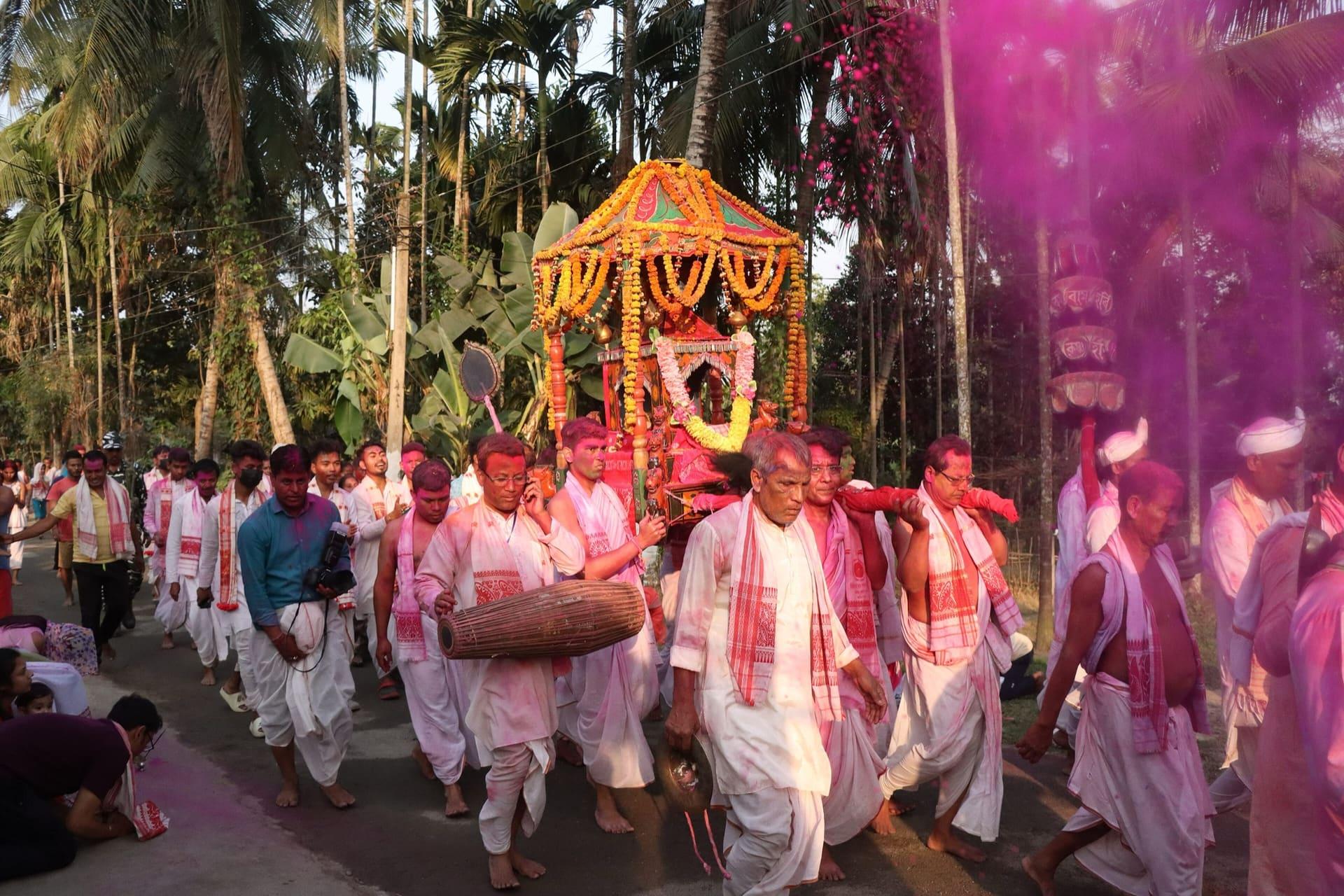
On the north bank in Rajaduar, below the Chandrabharati hill - a Krishna temple, and the liveliest of the North Guwahati group, especially through Doul Jatra in spring. You can drive around over the Saraighat bridge or take the ferry across.
8. Aswaklanta, above the north bank
Also in North Guwahati, looking straight back across the river at the city. The name carries a story about Krishna resting his tired horses here. Ahom-built in the seventeenth century, and quiet almost always.
9. Dirgheswari, on the rock
Further along the north bank, up a rock face with rock-cut sculpture on the way to the top - another Shakti site, and one of the best views of the Brahmaputra you can get without a boat. Also the calmest of the ten.
10. Hayagriva Madhava, at Hajo
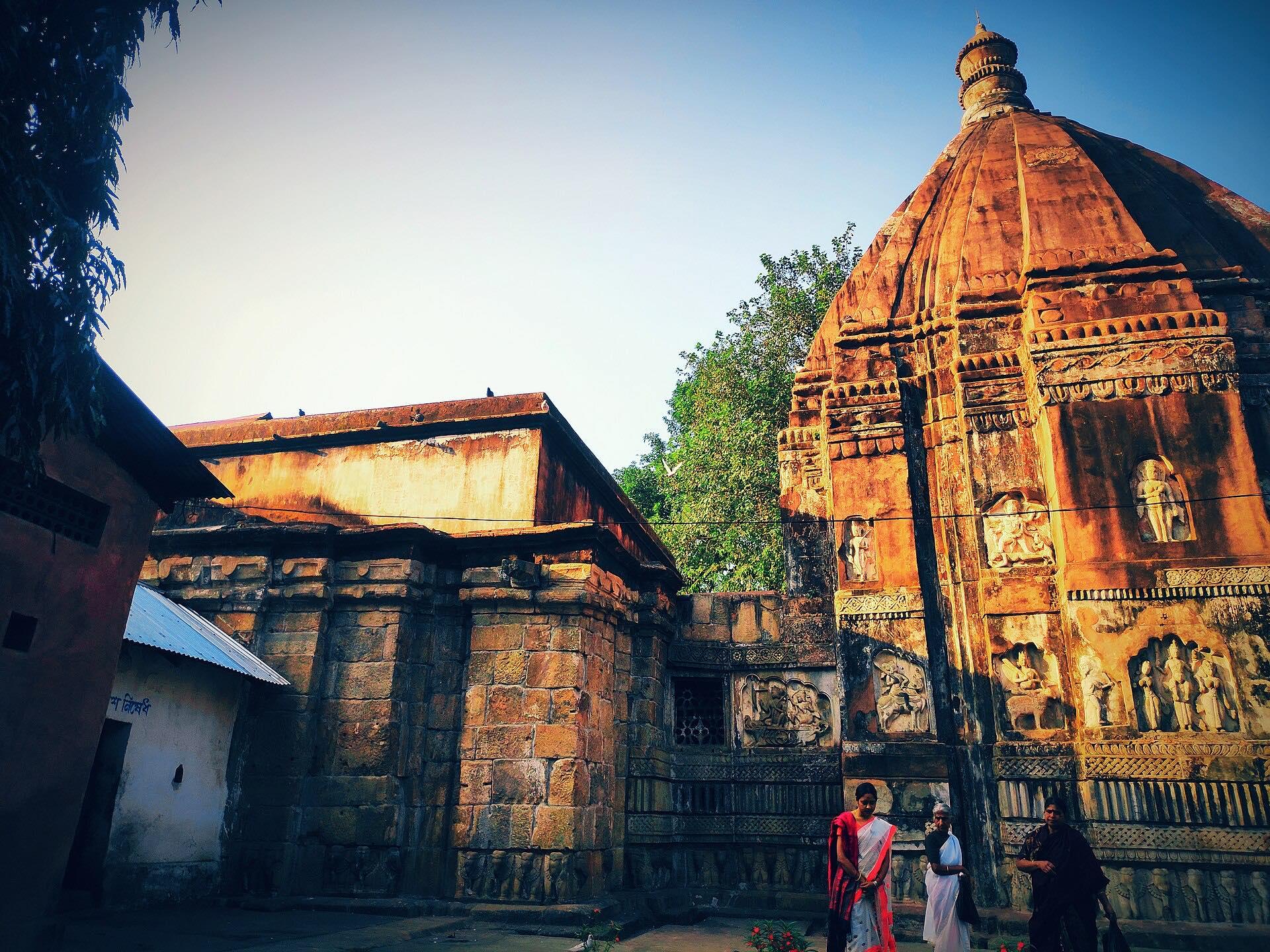
Half an hour west of the city on Monikut hill, a stone Vishnu temple rebuilt in the 1500s on much older foundations, with carved elephant friezes running around the base. Some Buddhist traditions hold that the Buddha attained nirvana here, and Bhutanese and Tibetan pilgrims come for that reason.
On the same small hill is Poa Mecca, the dargah of the Sufi saint Giyasuddin Auliya - poa meaning a quarter, for the quarter of the merit of the Hajj a pilgrimage here is held to carry. Three faiths, one hill, no fuss about it. And Sualkuchi is minutes away, so one morning covers all of it.
Doing them in a day
Four or five of these is a comfortable full day with a car; ten is two. The order that works is Kamakhya early, the old-city pair mid-morning, Navagraha and Basistha after lunch, and the river at the end - or the north bank as a half day of its own, by ferry rather than bridge.
We run it as the Guwahati religious circuit, and the state-wide version of the same idea is Sacred Assam. Dress modestly at all of them, and expect to leave footwear and leather outside.