
Kaziranga, properly.
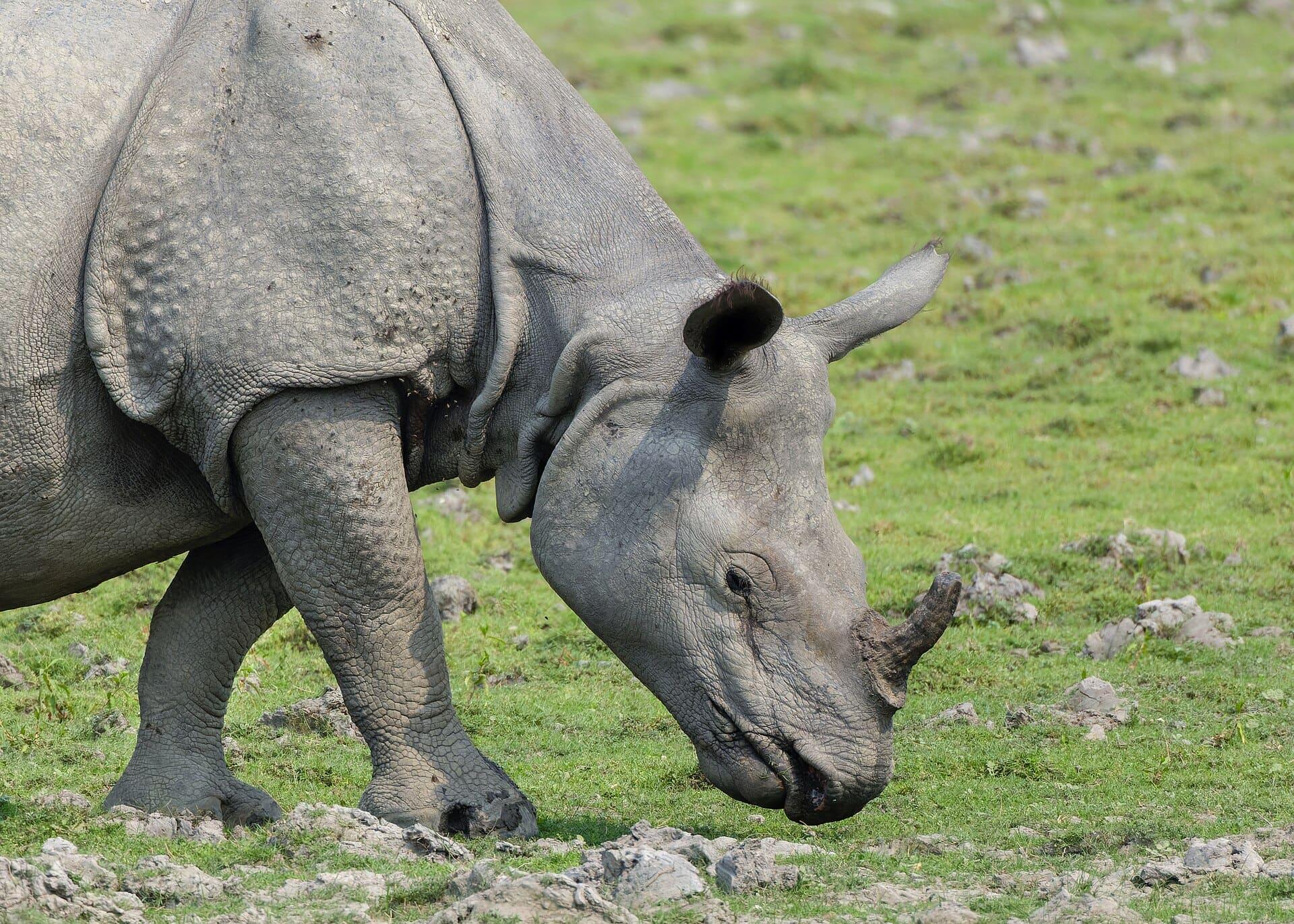
Two-thirds of the world's one-horned rhinos live in this floodplain. Which range you book, and whether you go twice, decides what you actually see.
Reviewed August 2026
The short version: two mornings, two different ranges. Almost everyone is taken to Kohora because it is nearest the lodges, does one drive, and leaves. Bagori at dawn and Agoratoli the next morning is a different holiday.
Range by range
Where to actually go.
| Range | Also called | What it is like | Best for |
|---|---|---|---|
| Kohora | Central | Closest to the highway and to most of the lodges, so it is where nearly everyone goes. Good, and busy. | A first visit, a short stay, and the elephant ride |
| Bagori | Western | Open grassland, and in our experience the most reliable rhino density in the park. | Rhinos and photography |
| Agoratoli | Eastern | Wetlands rather than grassland - pelicans, storks, far fewer vehicles, and a completely different feel from Kohora. | Birds, and quiet |
| Ghorakati | Western | Quieter still, and correspondingly little visited. | Getting away from other vehicles altogether |
We book across the ranges rather than defaulting to the busiest one. Gate timings and which side of the jeep to sit on vary by range and by season - ask on the day, and your naturalist will know.
The core of it
The jeep safari
First light, an open jeep, and mist sitting thigh-deep on the grassland so the whole park looks like a lake with the tops of things poking out of it. This is how you cover ground, and it is what the trip is built around.
Kaziranga is not a park where you hope. Within ten minutes of the gate somebody usually says there in a low voice, and a shape a hundred metres off resolves into two tonnes of armour-plated animal moving through six-foot grass with almost no sound at all.
Book ahead in season - slots go. And keep your voice down: most good sightings come after five minutes of everybody shutting up.
If you can get it
The elephant safari
Run at first light in the Central range, and worth taking for one reason: it is the only way to get in among the tall grass rather than looking over the top of it.
The catch is capacity. It is small, the forest department allocates it, and in season it is routinely gone weeks ahead. We apply the moment a trip is confirmed — and if it cannot be had, we tell you rather than quietly substituting a second jeep.
Entry, camera and armed-guard charges are set by the forest department and paid at the gate. They change, so we quote them at actuals rather than printing a figure here that will be wrong by next season.
When to come
November to April, and why.
Gates are typically open from early October to around mid-May, and November to April is the best of it. The park closes for the monsoon, when the Brahmaputra floods it and the wildlife moves up into the Karbi Anglong hills across the highway.
That flood is not a malfunction to be worked around. It is the reason the grassland exists at all, and the reason the rhino population is where it is.
Exact opening and closing dates shift year to year with the water, so they are worth confirming close to travel. Winter is the region's best season generally, and Kaziranga is a large part of why.
From experience
Six ways this goes wrong.
01
One morning at Kohora, then leaving
This is the standard trip and it is the one thing we would change. Kohora is the busiest range because it is nearest the lodges. People who do one safari there have seen Kaziranga; people who do Bagori at dawn and Agoratoli the next morning have actually been there.
02
Assuming the elephant ride can be added on arrival
Elephant safari capacity is small, allocated by the forest department, and routinely gone weeks ahead in season. We apply the moment a trip is confirmed. If it cannot be had, we say so rather than quietly substituting a jeep.
03
Dressing for Assam instead of for dawn
An open jeep at first light in January is genuinely cold - colder than almost every visitor expects of Assam. A fleece and something windproof change the morning completely, and nobody has ever regretted carrying them.
04
Planning around the monsoon
The park closes when the Brahmaputra floods it. That is not a malfunction; the flood is the reason the grassland exists at all, and the wildlife moves up into the Karbi Anglong hills across the highway until it drains.
05
Coming for a tiger
Kaziranga holds one of the highest tiger densities of any protected area on earth and you will almost certainly not see one - the grass is simply too tall. Pugmarks on the track are common. Come for the rhino and treat anything else as a gift.
06
Trusting a page like this one
Including ours. Gate timings, entry fees and the season's opening dates are set by the forest department and move. Confirm close to travel.
Straight answers
The questions we actually get asked.
- Which range at Kaziranga should I book?
- Bagori (Western) for the most reliable rhino density and open grassland, Agoratoli (Eastern) for birds, wetlands and far fewer vehicles, Kohora (Central) if it is a first visit or a short stay. Ghorakati is quieter still. If you have two mornings, do two different ranges rather than repeating one.
- Do I need a permit to visit Kaziranga?
- No. Assam requires no Inner Line Permit or Protected Area Permit, for Indian or foreign travellers. You pay forest-department entry at the gate, which is a different thing.
- When is Kaziranga National Park open?
- Gates are typically open from early October to around mid-May (this season they opened on 3 October), and the park closes for the monsoon when the Brahmaputra floods it. Exact opening and closing dates shift year to year with the flood, so they are worth confirming close to travel.
- Jeep safari or elephant safari at Kaziranga?
- Do a jeep safari - it is the core of the park and it is how you cover ground across a range. The elephant ride is worth adding if you can get it, because it is the only way to get in among the tall grass rather than looking over it, but capacity is small, the forest department allocates it, and it is often sold out weeks ahead.
- Will I actually see a rhino at Kaziranga?
- Almost certainly. Roughly two-thirds of the entire world population of the greater one-horned rhinoceros lives here, and this is not a park where you hope - sightings usually come within the first few minutes of a morning drive.
- Will I see a tiger?
- Realistically, no. Kaziranga has one of the highest tiger densities of any protected area in the world, but the elephant grass is tall enough that they are very rarely seen. Pugmarks on the track are common.
- How far is Kaziranga from Guwahati?
- About five hours by road along the Brahmaputra's south bank, broken where it makes sense along the way.
- How many nights do I need at Kaziranga?
- Two nights. That gives two dawn safaris, which is what lets you do two different ranges - and the difference between one range and two is the difference between a visit and a proper look at the park.
- How much does a Kaziranga safari cost?
- Forest-department entry, camera and armed-guard charges are set by the department and paid at the gate, and they change, so we quote them at actuals rather than publishing a figure that will go stale. Our two-night Kaziranga package including lodge, two jeep safaris and transfers starts at ₹9,500 per person, indicative.
- What else lives in Kaziranga besides rhinos?
- Wild water buffalo with enormous sweeping horns, eastern swamp deer found nowhere else, and herds of elephant. It is also a Ramsar site and an Important Bird Area - fish eagles, adjutant storks, bar-headed geese in winter, and a decent chance at the Bengal florican.
Reviewed August 2026. Gate timings, fees and the season's dates are set by the forest department and move - confirm close to travel, with us or with the park.
What we handle
We run this every season.
We are based in Guwahati, about five hours down the road. Kaziranga is not a place we read about.
From ₹9,500 · 2-3 nights- Safaris booked across the ranges, not defaulted to the busiest one
- Elephant-ride applications in the moment you confirm, while capacity still exists
- Lodges from clean mid-range to the genuinely luxury properties on the park edge
- A naturalist who knows which side of the jeep to sit on, range by range
- Forest-department charges quoted at actuals, paid at the gate
The trips it belongs to
Kaziranga Wildlife Escape3N / 4DSee the route Assam - Rhino, Tea and the River Island5N / 6DSee the routeAssam requires no permit at all - see permits, explained for which North East states do.
Tailored for you
Get a Kaziranga itinerary built round two ranges
Tell us your dates and we will come back with a route, the ranges we would book for those dates, and an exact quote - usually within 24 hours.