Food in Meghalaya is simple, smoky and full of flavour. Rice sits at the centre of the plate, and pork is the meat most people love.
This guide explains the dishes you will see, from jadoh to Garo chutneys. It also covers how vegetarian and Jain travellers eat well here, because most of our guests ask.
How Meghalaya eats
Three peoples live in these hills. The Khasi hold the centre, around Shillong and Sohra. The Jaintia, or Pnar, live to the east around Jowai. The Garo live in the far west.
Each has its own dishes, but some things are shared. Rice comes with every meal. Fermented foods, smoked fish and black sesame turn up again and again.
Spices are light. If you expect the heat of a North Indian curry, you will find this food gentler.
Khasi dishes to try
Jadoh is the best-known dish in the state. It is rice cooked with pork, and it usually comes with doh khleh and tungrymbai on the side.
Doh khleh is a pork salad with onion, green chilli and salt. Food stalls sell it all over the hills.
Tungrymbai is made from fermented soybeans. It is often cooked with pork, but some cooks make it with sesame instead.
Tungtap is a sharp chutney of fermented dry fish. Locals eat it with phan, plain boiled potatoes.
Ja tyndong is cooked in bamboo tubes over a fire. Rice, fish, meat or vegetables can all go into the tube.
Rice cakes and snacks
The Khasi make a family of rice snacks called jingbam dihsha. Meghalaya Tourism says they are made from ground rice, water, and sugar or jaggery.
Pumaloi is a round steamed rice cake, cut in half to serve. Pu sla is steamed inside a leaf. Pu khlein and ja shulia, a sticky rice, belong to the same family.
Most of these are made without meat, but not all. Pu doh is made with strips of pork. Ask before you buy.
Putharo is a soft, spongy rice-flour bread from the Jaintia Hills. It is often served with dohjem, a pork curry with black sesame.
Jaintia and Garo dishes
In Jaintia homes, doh sniang nei-iong is an everyday dish. It is pork cooked with sesame and served with rice. 'Kharang, a smoked fish, goes into curries, chutneys and salads.
Garo food is different again. Nakham bitchi is a spicy dry fish gravy eaten with rice. Do'o kappa is chicken cooked with a natural potash, then finished with coriander and chilli.
Most Garo meals come with me.kin, a chutney made from banana flowers.
Plant-based Khasi dishes
A few newer Khasi dishes are built on vegetables. Muli khleh is a radish salad dressed with perilla seeds. Shana nei-iong is black beans cooked in sesame.
Syrwa tit tung is a soup of wild mushrooms. Ask how it is made, since some cooks use a meat stock.
They are newer dishes, so not every kitchen makes them. Ask for them by name.
Fermented and smoked flavours
Fermenting and smoking sit at the heart of hill cooking. Meghalaya Tourism names tungrymbai and pickled bamboo shoot as staples of it.
Smoked fish, such as the Jaintia 'kharang, goes into curries and chutneys. Dried fish turns up in Garo gravies too.
These flavours are strong, and some visitors need a bite or two to get used to them. Start with a spoon of tungrymbai beside your rice, not a full bowl.
Street food in Shillong
Shillong's best-known snack for vegetarians is aloo muri. It is puffed rice tossed with boiled potato, onion, green chilli, spices and mustard oil. Eat it at once, before it goes soft.
Momos are everywhere, and vegetable ones are easy to find. The stalls around Police Point in Police Bazar are a good place to start.
Bakeries are part of town life too. In December the cake shops fill with queues before Christmas.
Eating vegetarian in Shillong
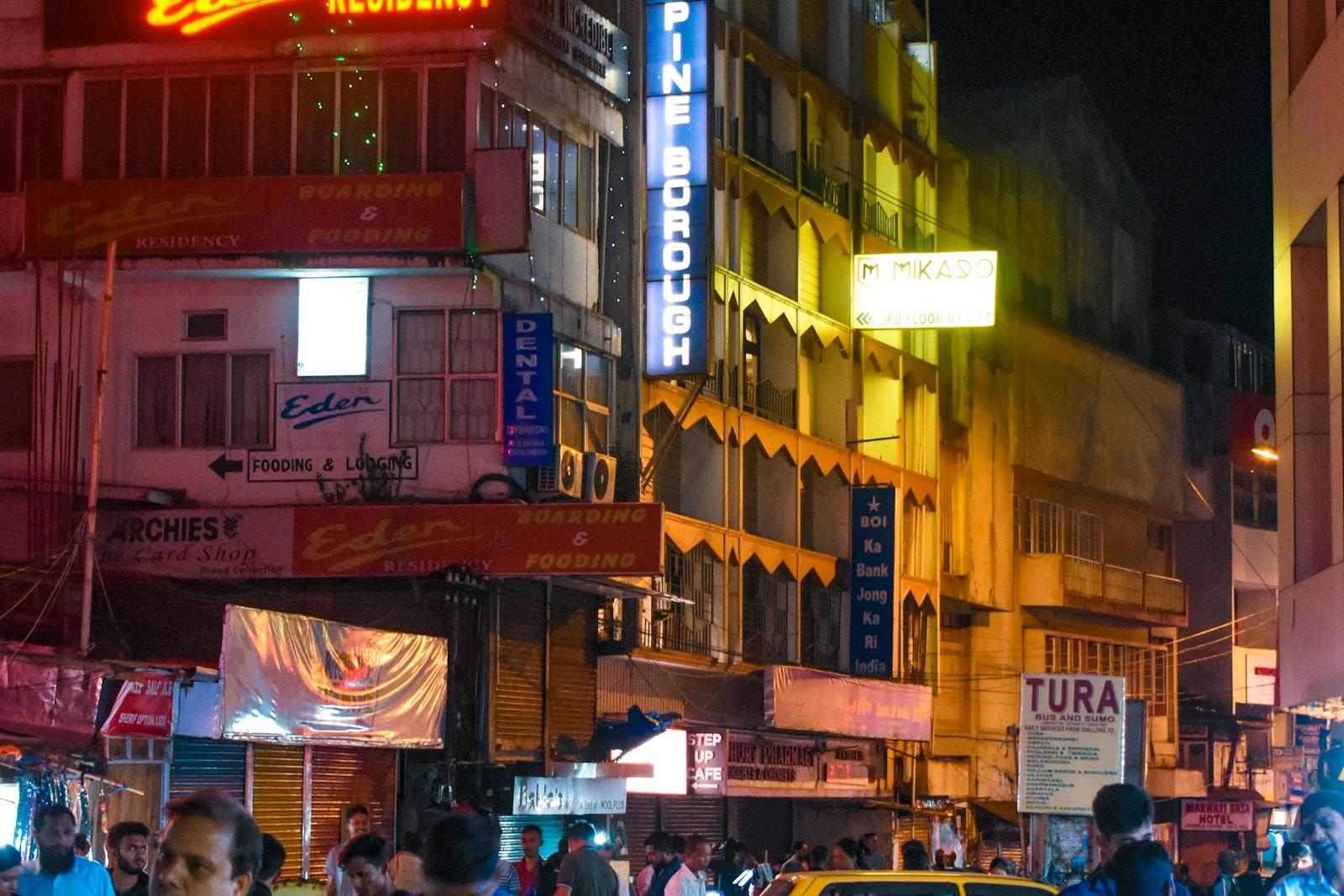
Shillong is the easiest place in Meghalaya to eat vegetarian. The city has long-running vegetarian-only restaurants, and some of them serve Jain food.
Police Bazar is the best area to look. Menus cover North Indian, South Indian, Chinese and more. Dal, roti, paneer and dosa are easy to find.
Most hotel restaurants also cook vegetarian food. Tell them in the morning if you need something special for dinner.
Eating vegetarian in Sohra and the villages
Outside Shillong the choice narrows. Sohra has resorts and small eateries. Most stays will cook simple vegetarian food, such as rice, dal and a vegetable, if you ask.
In villages like Mawlynnong and Nongriat, you eat what the household cooks. At a Nongriat guesthouse that usually means a plate of rice and dal.
Carry snacks on long sightseeing days. Viewpoints like Laitlum have little more than a couple of tea stalls. And remember that Mawlynnong's shops and stalls shut on Sundays.
Tips for Jain and pure-veg families
Most kitchens outside the vegetarian-only restaurants also cook meat. If that matters to your family, eat in Shillong's vegetarian-only restaurants and tell your hotel before you arrive.
For Jain meals, spell it out: no onion, garlic, potato or other root vegetables. Do not assume a "veg" dish follows those rules. Aloo muri, for one, has both potato and onion.
Pack some dry food from home for the Sohra and Dawki days. Theplas, khakhras and dry fruit travel well.
We check vegetarian and Jain meals with every stay before you travel. That is how our veg-friendly trips work.
Food for children and older parents
Steamed momos, plain rice and dal, and the soft rice cakes are easy on young and older stomachs. Most local food is mild, but ask for less chilli in hotel curries.
Drink bottled or filtered water, and carry ORS and your usual medicines. Long drives on hill roads are harder on a full stomach, so eat light before them.
How to eat a Khasi meal
If you do eat meat, try a proper Khasi meal at least once. Order jadoh, doh khleh and a little tungrymbai, and eat them together.
Taste the chutneys with care. Tungtap is strong, and a little goes a long way.
Our living culture and cuisine trips can include a Khasi meal in a hill kitchen, so you see how it is cooked.
Local drinks
Tea stalls are everywhere, even at bare viewpoints like Laitlum. Two local drinks are worth knowing.
Cha khoo, from the Jaintia Hills, is a drink made from rice. It looks like tea but tastes mild, a little like coffee. Sha shiahkrot is a Khasi tea made by boiling the root of a forest creeper.
Meals on our Meghalaya trips
Our Meghalaya trips include breakfast every day. On the week-long trip we add dinners on the Sohra plateau, where there are fewer places to eat out.
Lunch is left open, so you can stop where you like. Your driver knows the roadside places that serve hot rice, dal and vegetables.
Plan your trip
Our Guwahati and Shillong long weekend gives you two evenings to eat your way round Police Bazar. It starts from ₹17,500 per person, indicative, for 2 adults sharing, land only.
Read the Meghalaya travel guide for the rest of the state, or tell us how your family eats. We reply within 24 hours.