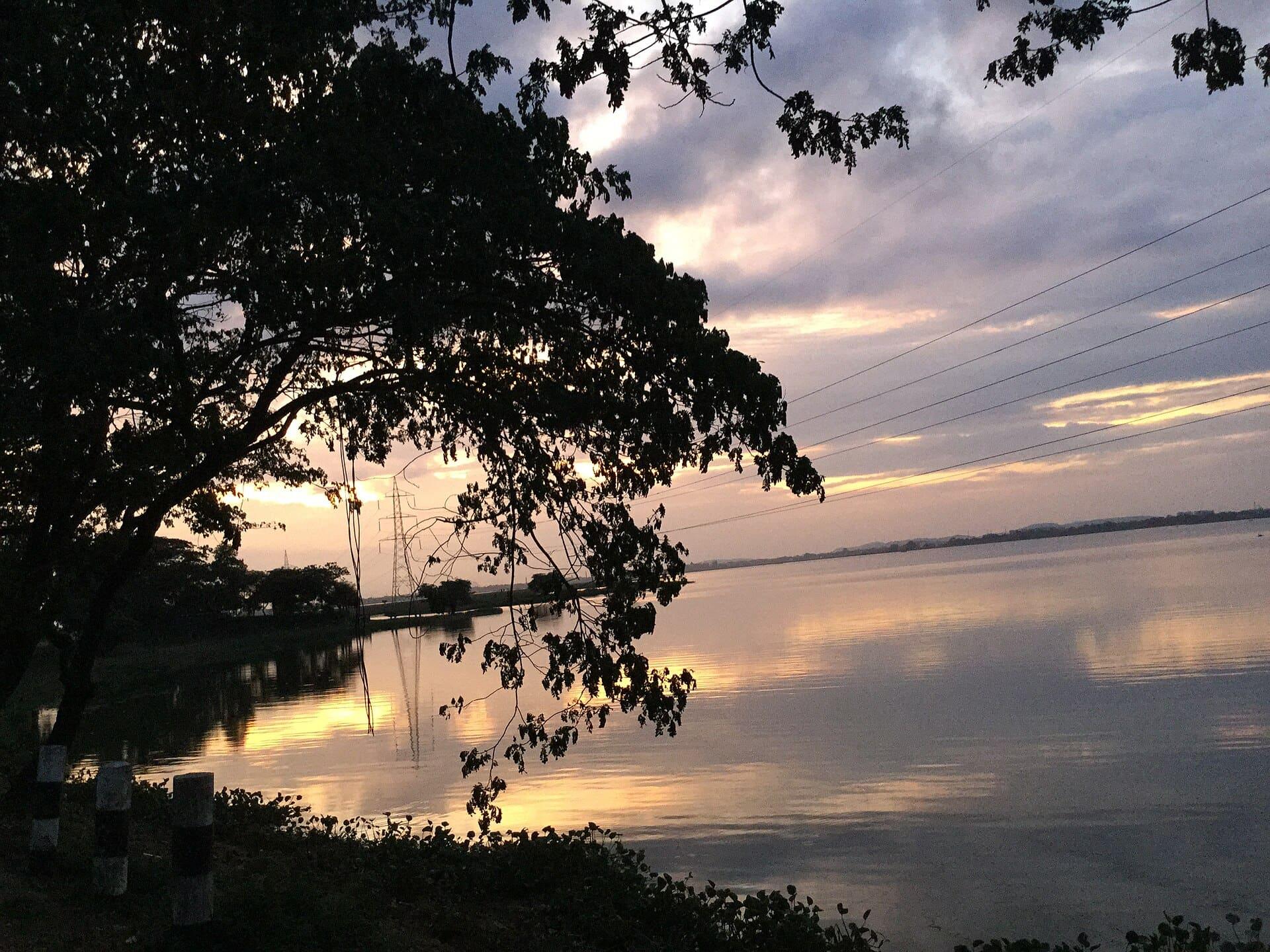
The gate opens at dawn and there is mist sitting on everything, thigh-deep, so that the grassland looks like a lake with the tops of things poking out. It is cold in an open jeep at that hour in Assam in January, colder than visitors expect, and everyone is wrapped up and quiet. Dipankar, our naturalist, has not stopped scanning the grass since the gate.
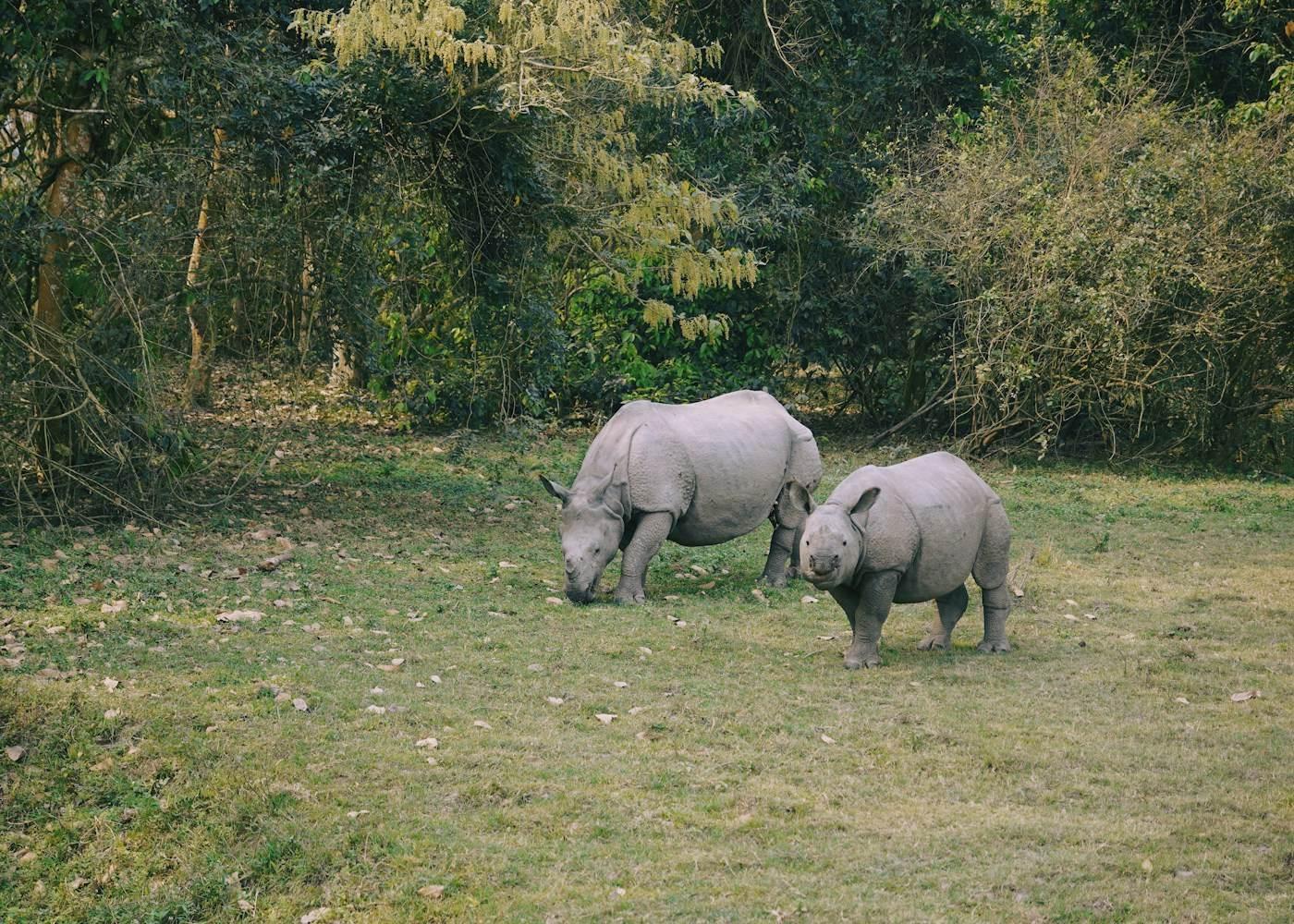
You do not have to wait long. Kaziranga is not a park where you hope. Within ten minutes somebody in the vehicle says "there" in a low voice, and there is a shape in the grass a hundred metres off that resolves, as the light comes up, into something prehistoric.
The animal itself
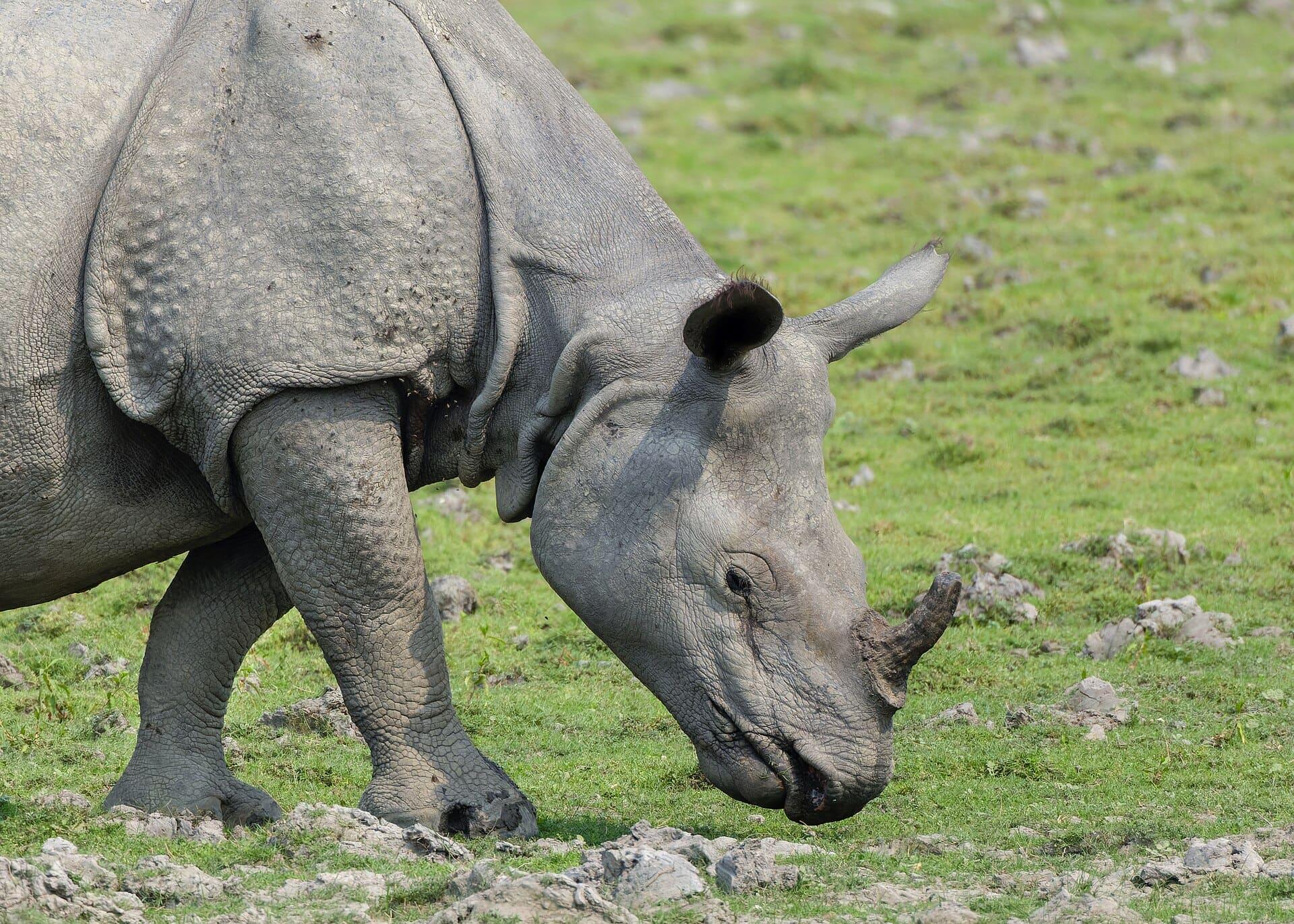
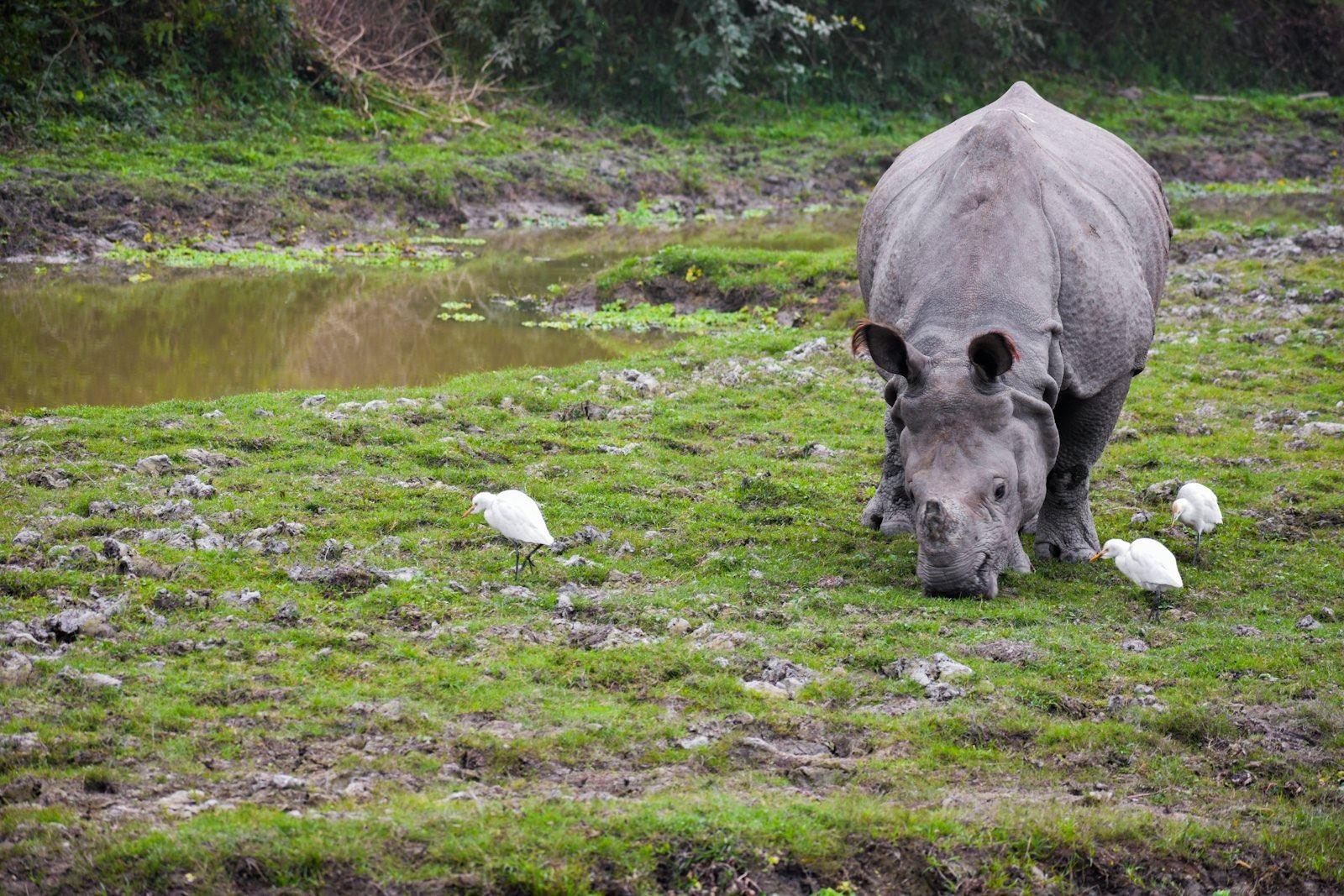
Photographs get the greater one-horned rhinoceros wrong. They make it look like a grey cow with a bump. In front of you it is nothing of the sort - it is armour-plated, deeply folded at the shoulders and haunches like riveted steel, with a hide that hangs in slabs and a single thick horn worn blunt at the tip. Two tonnes of animal, and it moves through six-foot grass with almost no sound at all.
They are also faster than anything that shape should be. A rhino at a charge does around 40 km/h, which is a fact Dipankar mentions in a level voice while reversing the jeep.
The moment it looks at you
This is the part I wanted to write about. If you are close and the vehicle is still, at some point the animal will stop grazing and turn its head, and you will be looking at each other.
The eyes are small and set low on the side of the skull and they are not, if I am honest, expressive. There is no obvious intelligence in the way there is with an elephant. What there is instead is age. You get the very strong sense of looking at something that was doing exactly this - head down in wet grass at dawn on a floodplain - long before there was anyone around to describe it, and that finds you neither interesting nor threatening enough to change plans over.
It holds for maybe five seconds. Then it decides you are furniture and goes back to eating, and everybody in the jeep exhales at once.
Ranges, and why it matters which one
Kaziranga is split into ranges, and most visitors get taken to Kohora, the central one, because it is closest to the highway and the lodges. It is good and it is busy.
Western range at Bagori has, in my experience, the most reliable rhino density and lovely open grassland. Eastern at Agoratoli is the birder's range - wetlands, pelicans, storks, fewer vehicles, and a completely different feel. Ghorakati in the west is quieter still.
If you have two mornings, do two different ranges. People who do one safari at Kohora and leave have seen Kaziranga; people who do Bagori at dawn and Agoratoli the next morning have actually been there.
What else is in the grass
It is not a rhino park with extras. Kaziranga holds one of the highest tiger densities of any protected area in the world - you almost certainly will not see one, the grass is too tall, but they are there and pugmarks on the track are common. There are wild water buffalo with enormous sweeping horns, eastern swamp deer found nowhere else, and herds of elephant.
And the birds are extraordinary: the park is a Ramsar site and an Important Bird Area, with fish eagles, adjutant storks, bar-headed geese in winter and a decent chance at the Bengal florican.
Practicalities
The park is generally open from early October to around mid-May and closes for the monsoon, when the Brahmaputra floods it - which is not a malfunction but the reason the grassland exists at all. Wildlife moves to the higher ground of the Karbi Anglong hills across the highway during the floods.
Book jeep safaris in advance in season; slots go. Take a fleece and a windproof for the dawn drive, however unlikely that seems in Assam. Sit on the left or right depending on the range and ask your guide which. And keep your voice down - every good sighting I have had came after five minutes of everybody shutting up. If you are planning the practical side, our Kaziranga safari guide covers the ranges, the season and what tends to go wrong.