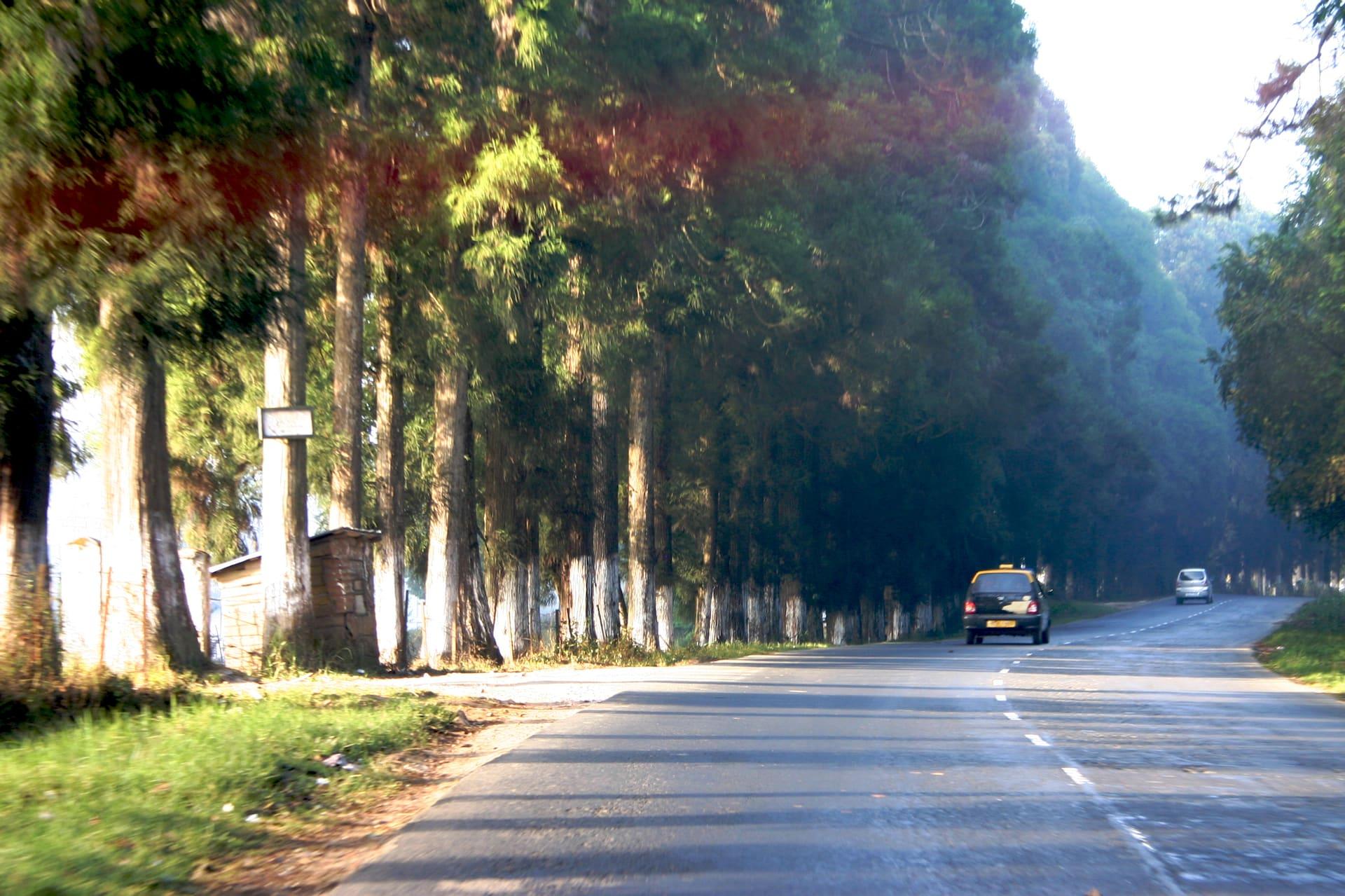
You leave Guwahati early, and for the first half hour nothing much happens. The city thins out into truck yards and tyre shops and roadside stalls stacking pineapples in pyramids. The Brahmaputra is somewhere behind your left shoulder, flat and enormous. Pranab, who has driven this road for eleven years, does not say much before Jorabat. The air coming through the window is the heavy, wet warmth of the Assam plains - the kind that settles on your skin and stays there.
Then the road tilts. You do not notice it at first. You notice it because your ears go, and because the pineapple stalls have become orange sellers, and because the driver has stopped overtaking. Somewhere around Jorabat, without any announcement, Assam has quietly become Meghalaya, and the country has started to stand up.
Umiam, and the first time you stop the car
About an hour in, the trees break on your right and there is a lake below you the colour of steel - Umiam, which everyone here still calls Barapani. It is a reservoir, technically. It does not look like one. It looks like somebody spilled the sky into a valley of pine.
Every driver on this road knows the viewpoint. Pranab pulls in without being asked. You will stop too, and you will take a photograph that does not work, because the scale is the whole point and a phone cannot hold it. Stand there for five minutes instead. On a clear morning the water is glass and the far shore is a soft grey line of hills. In monsoon the cloud comes down and eats the entire lake in front of you, and that is arguably better.
Shillong, which you should not skip through
Most itineraries treat Shillong as a place to pass. That is a mistake, but an understandable one - the traffic at Police Bazar can eat forty minutes and give you nothing back. If you have the afternoon, though, this is a genuinely strange and lovely town: tin roofs, pine, church spires, and a live-music culture that is entirely disproportionate to its size. Meghalaya's guitarists are absurd. Ask anyone where to eat and you will end up somewhere with excellent pork and a queue.
If you are pushing straight through to Sohra, at least stop for a plate of momos. Shillong momos are not Delhi momos. The pork ones come in a broth you will think about later.
The plateau, where the road stops pretending
Past Shillong the landscape does something I have never seen anywhere else in India. The trees stop. The hills flatten into open, wind-scoured grassland - high, bare and enormous, with almost nothing on it but the occasional line of stone. It looks like Scotland got lost. This is the Khasi plateau, and it is the reason this whole region behaves the way it does: warm wet air comes north off the Bay of Bengal, hits this wall, has nowhere to go but up, and drops everything it is carrying.
Which is to say: this is where the rain lives. On a clear day you can see for forty kilometres. On a wet one you drive at twenty with the hazards on and the world is a white sheet two metres past the bonnet. Both are worth the ticket.
Arriving
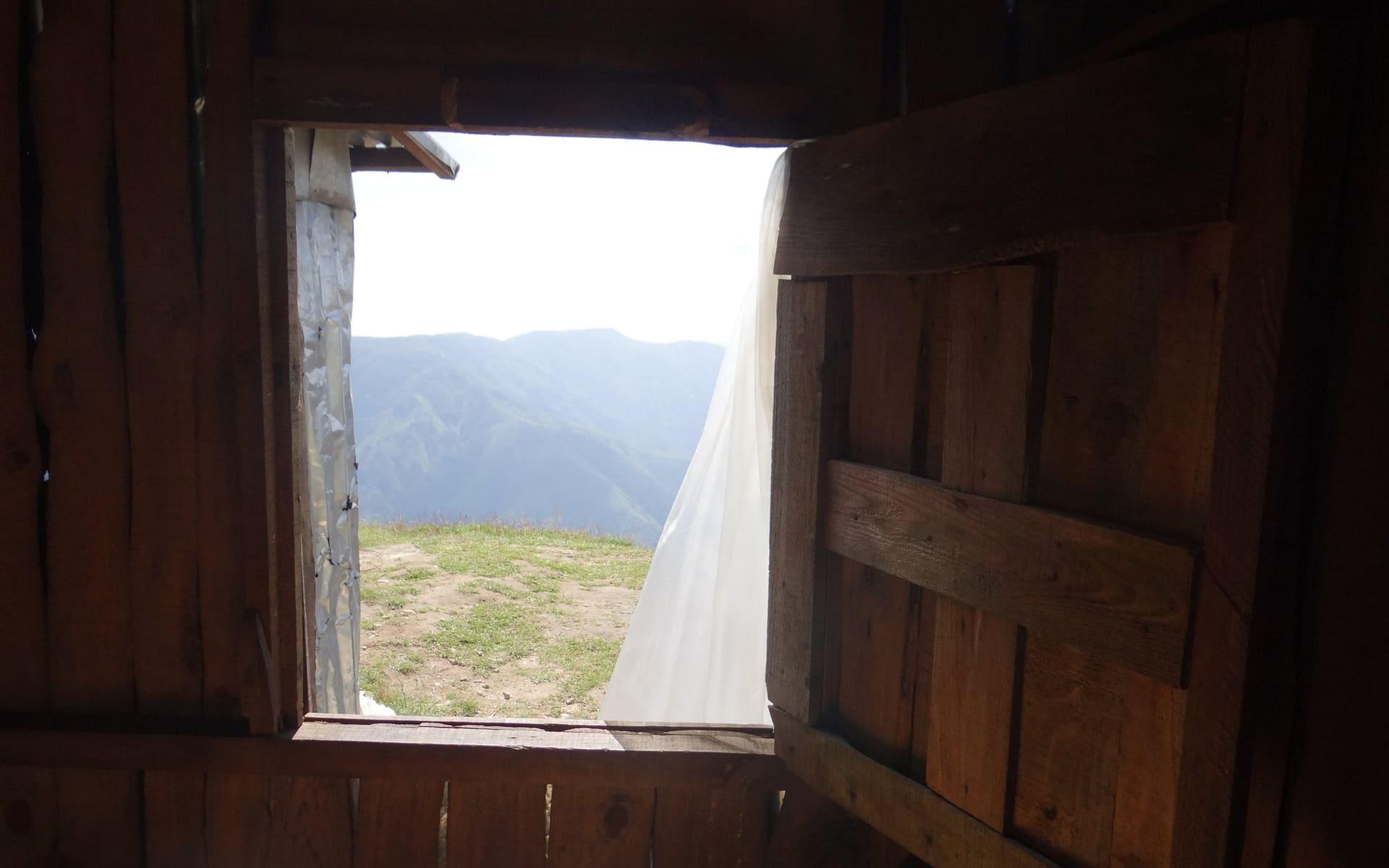
Sohra - the name Cherrapunji is the colonial one, and locals mostly use Sohra - arrives without ceremony. A few shops, a church, a turn-off. Then you walk to the edge of the plateau, and the ground simply ends.
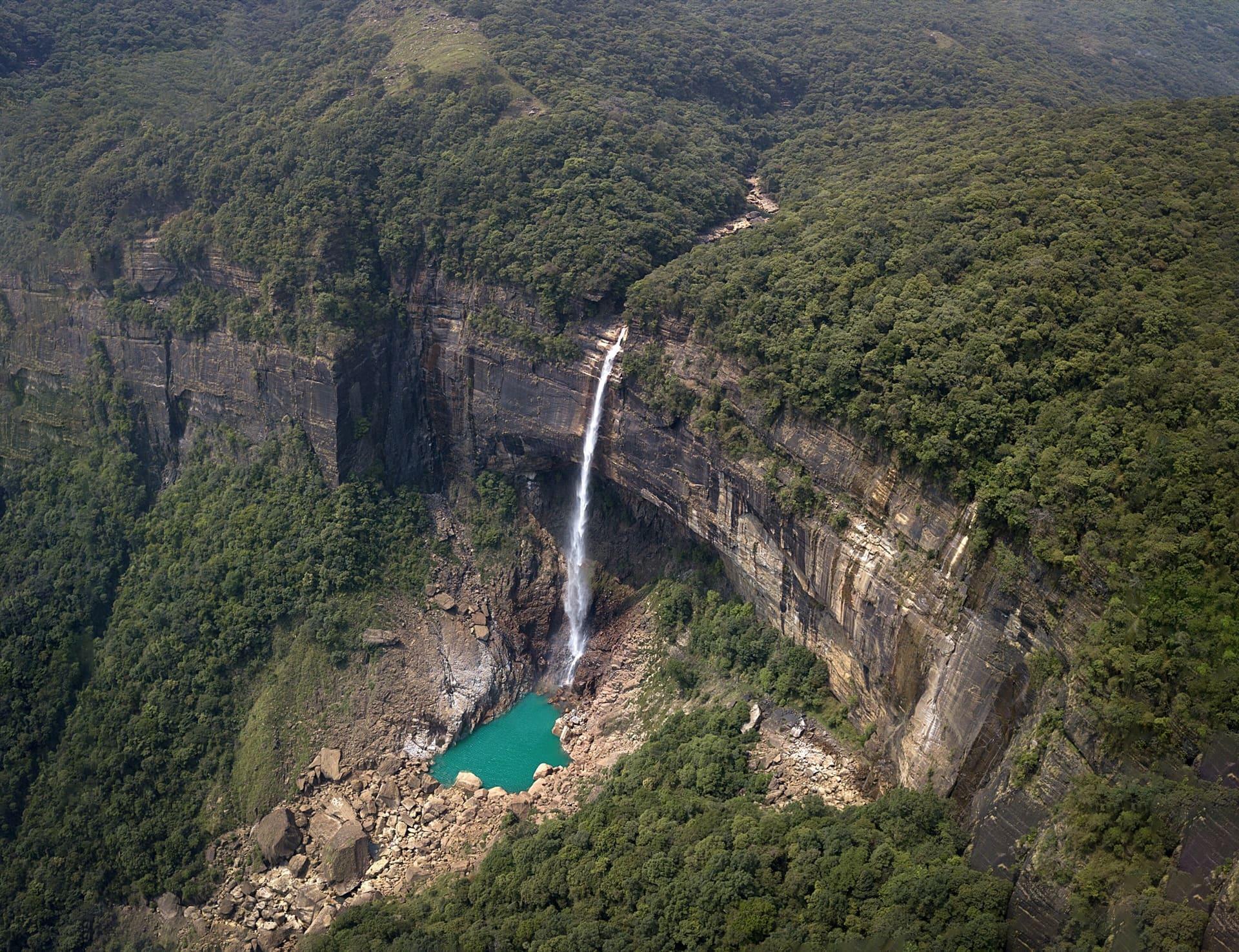
Below you is a drop of several hundred metres, and beyond that the plains of Bangladesh laid out flat to the horizon, hazy and green and unbelievably far. Waterfalls come off the cliff face on either side of you and disappear into the gorge before they land. If you have arrived in the afternoon, sit down. There is nothing you need to do for the next hour.
How to do this drive properly
Leave Guwahati by 8am. It is three and a half hours of actual driving and about six of the drive you should actually take - Umiam, Shillong, a plateau stop, and time at the edge before the light goes.
Do not book a same-day return. People do, and they see a road. Stay the night in Sohra. The place empties out around four in the afternoon when the day-trippers head back to Shillong, and what is left is the part worth coming for.