Our second trip in this series went west, into the Darjeeling hills. We spent time in Darjeeling itself, then went out to Lamahatta and down to Mirik.
Here are the places, the photos, and a few things worth knowing about each one. At the end you will find how to get there, when to go and what to pack.
Darjeeling
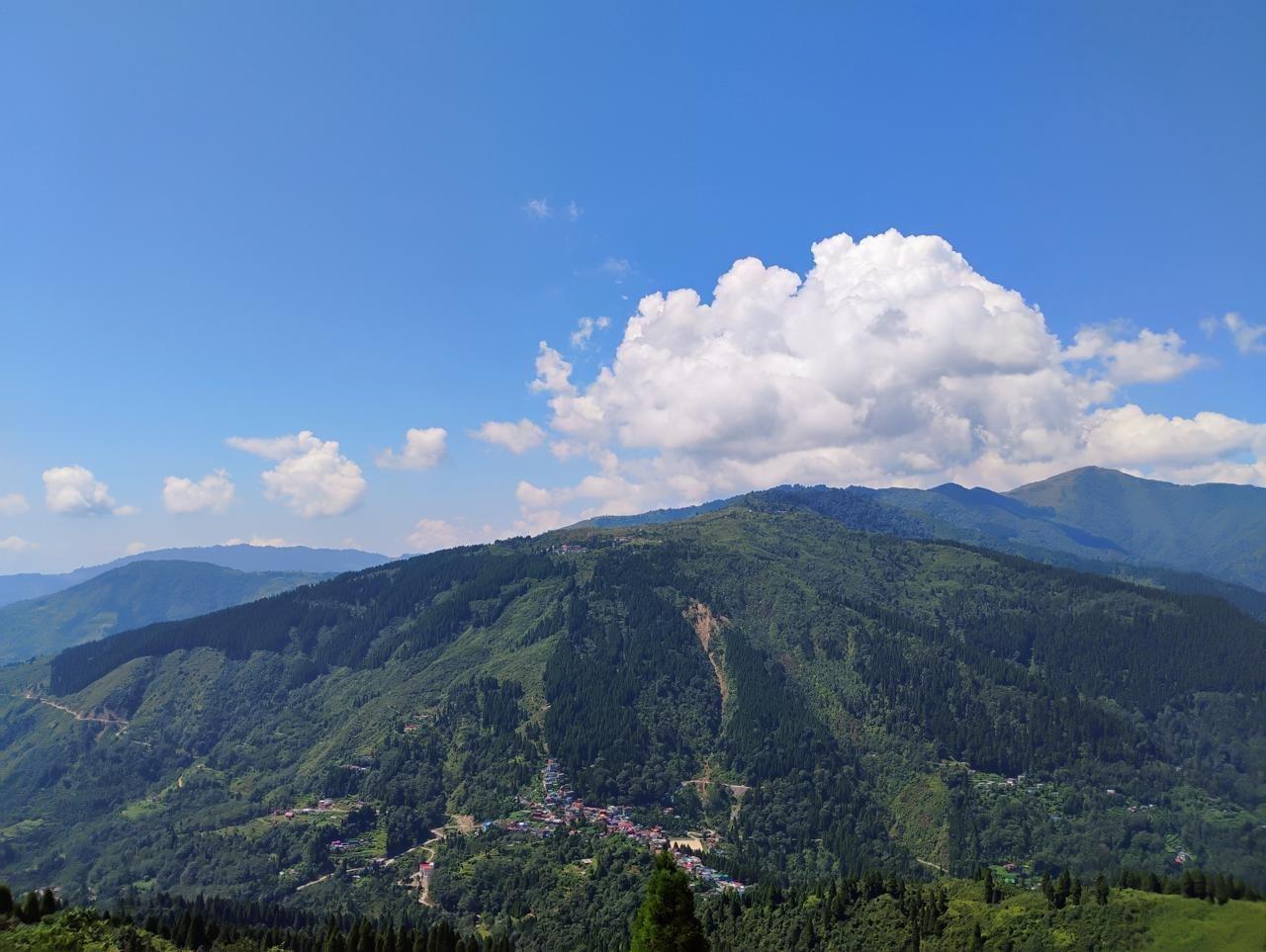
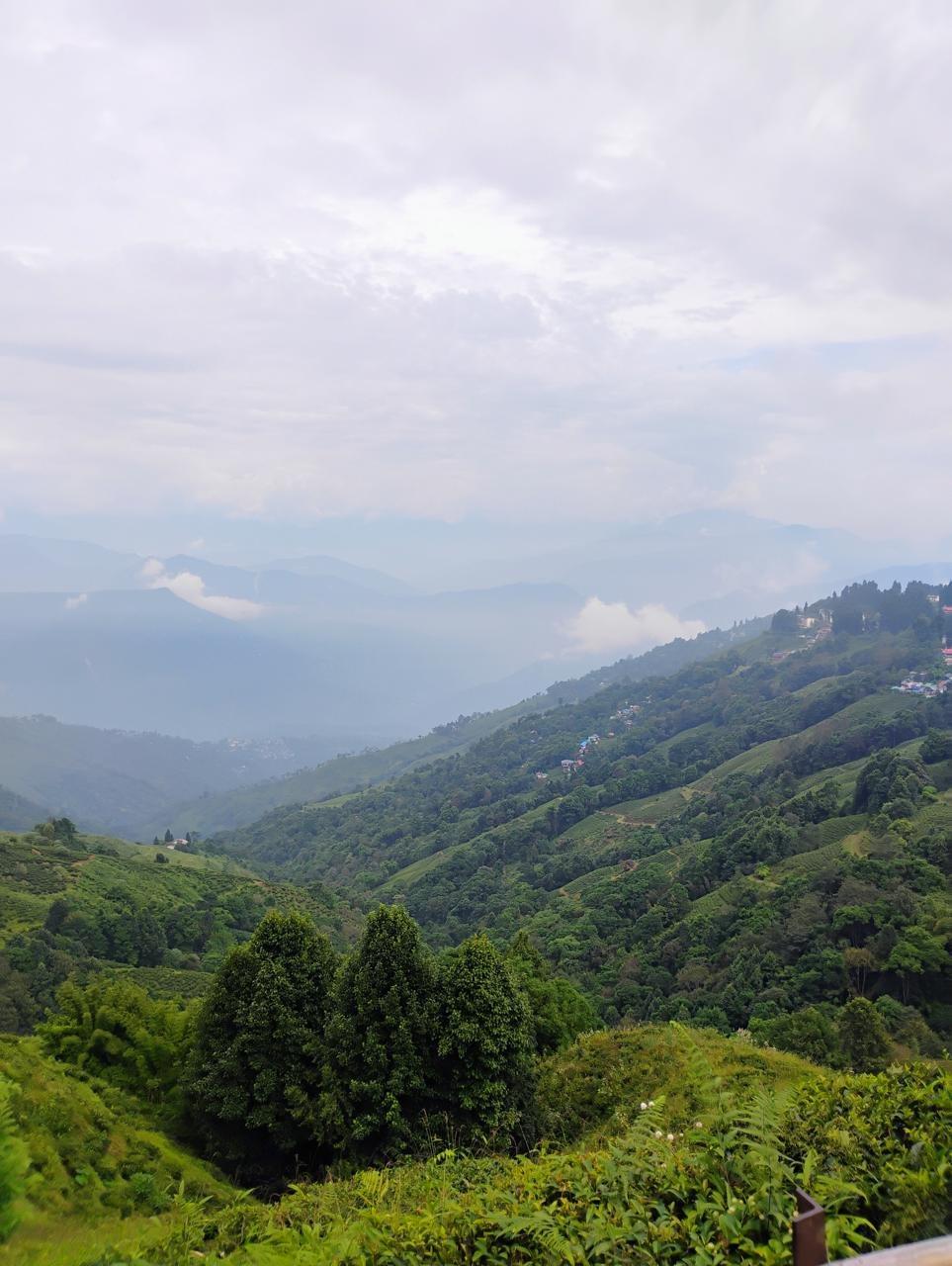
Darjeeling sits on a ridge with tea slopes falling away on every side. On a clear morning the hills stand out in sharp green under a blue sky.
The name comes from the Lepcha Dorje-ling, the place of the thunderbolt. The land once belonged to Sikkim. In 1829 two British officers saw the ridge as a place to escape the heat of the plains. The East India Company leased it from Sikkim in 1835.
Tea came next. The first trials began in 1840, and they worked. Planters soon covered the hills with tea gardens. Since 2005, Darjeeling tea has had a protected name. Only tea from these hills can use it.
The toy train reached the town in July 1881. It is still running, and it has been a UNESCO World Heritage Site since 1999.
On other days the cloud fills the valleys. Both kinds of day are part of being here.
Darjeeling after dark
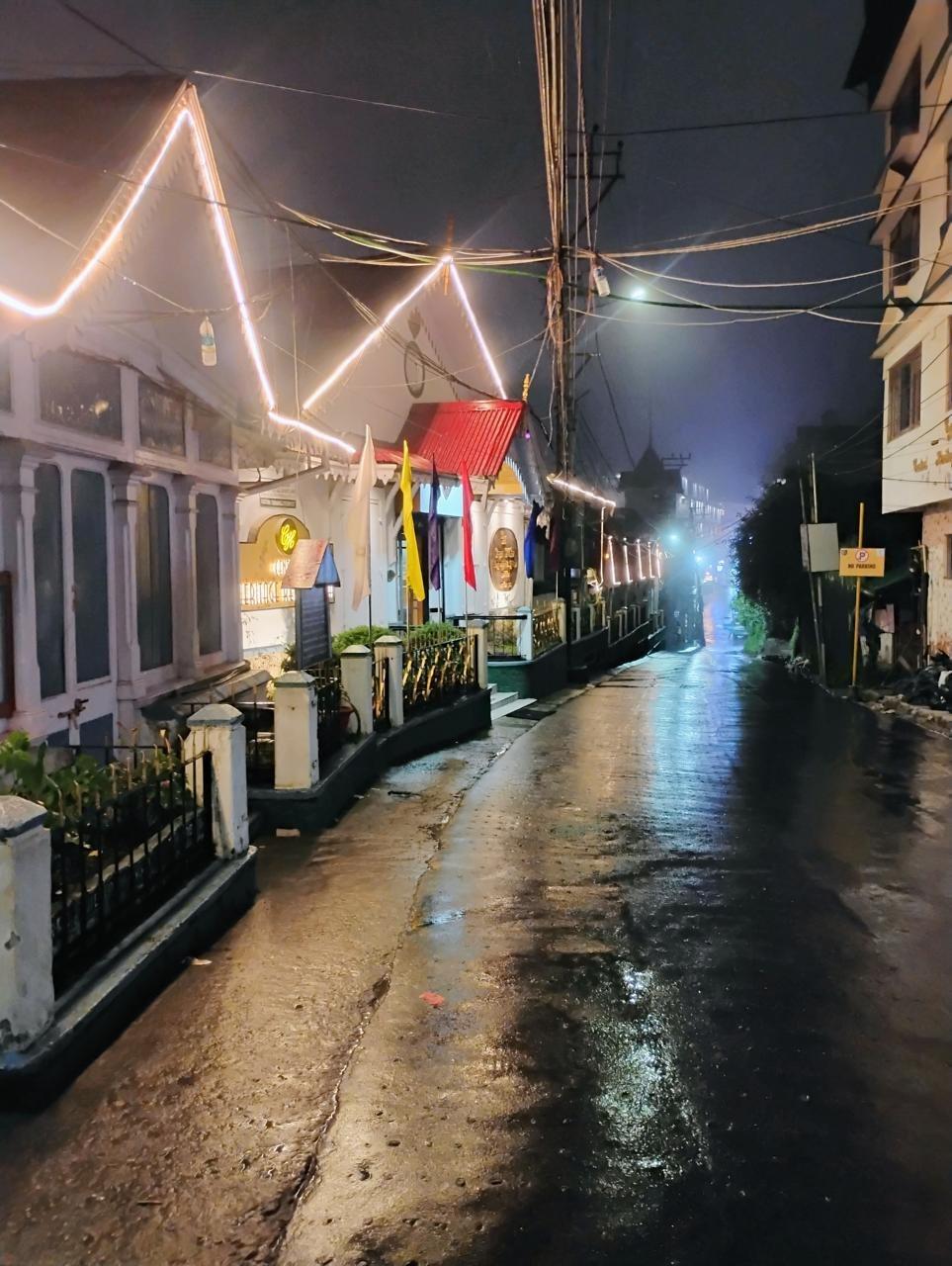
The town comes alive in the evening. We walked its streets at night, with the shop lights reflected on the wet stone.
Chowrasta is the town's main meeting and shopping place. Most evening walks pass through it.
On some nights the fog came down so thick that the street lights turned into soft glows.
And after rain, the lights strung along the old buildings shone on the road.
More to see in Darjeeling
If you have a day or two in town, these are the usual picks.
Our Darjeeling and Kurseong guide covers each of these in more detail.
Lamahatta
Lamahatta is a small village about 23 km from Darjeeling. In 2012 the Government of West Bengal made it into an eco-tourism park.
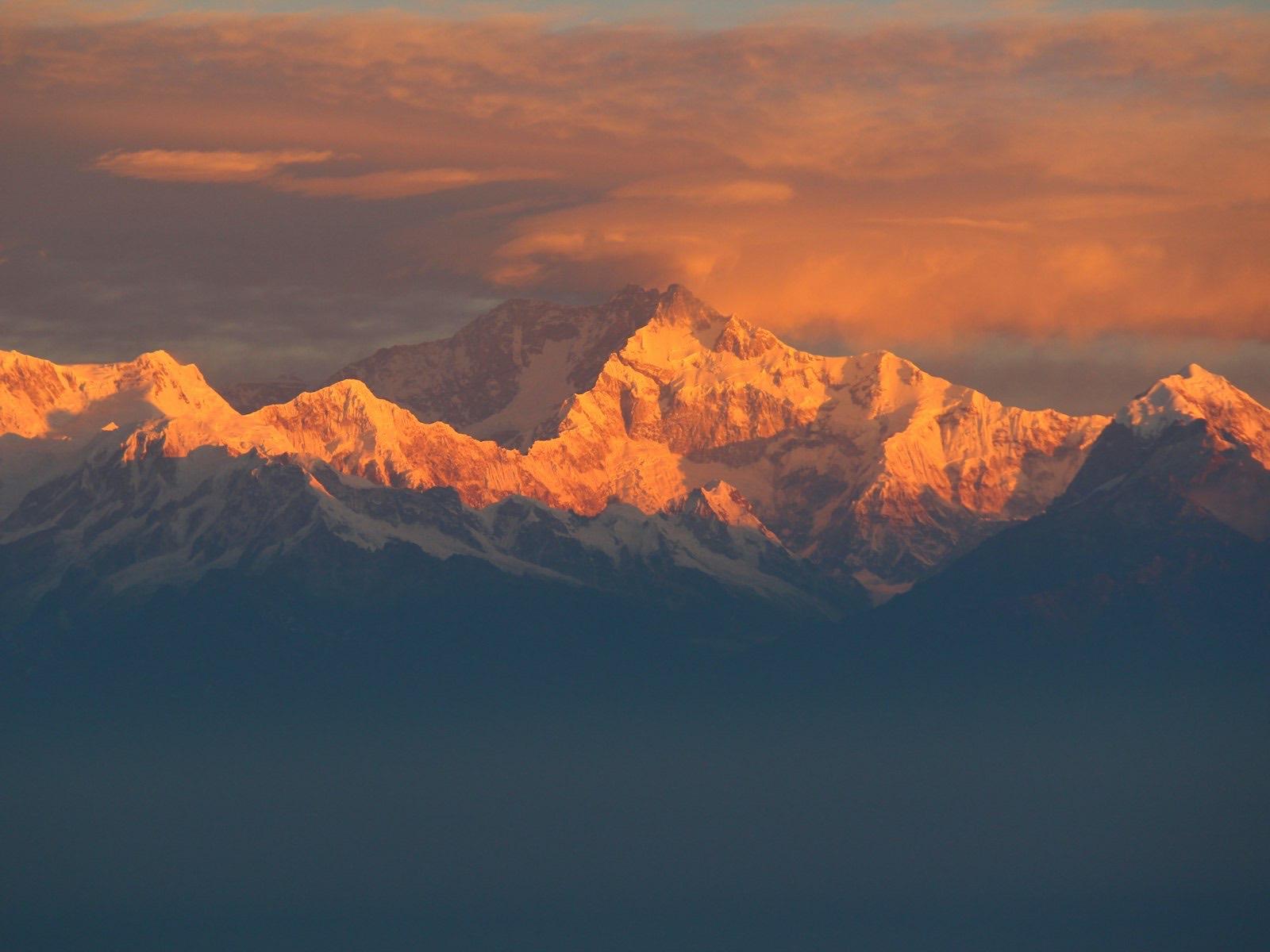
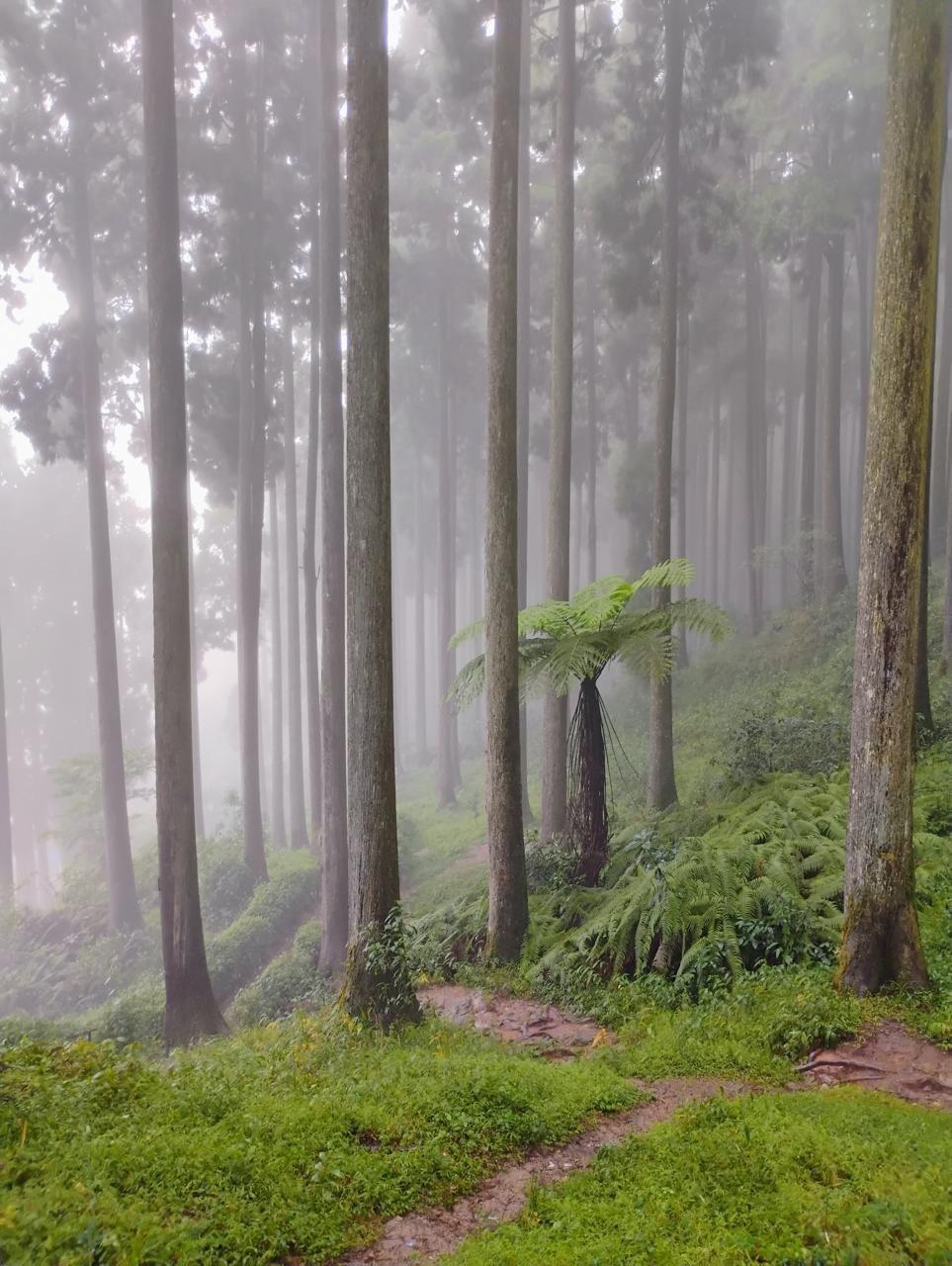
The park is a tall pine forest with a walking path through it and prayer flags along the way. On clear days you can see Kanchenjunga from here. There are homestays across the road if you want to stay the night.
The name is usually explained as a monk's hut: lama is a monk, and hatta a hut. The village sits on the road that runs from near Ghum towards Kalimpong.
A steep trail climbs from the park to a small lake at the top of the hill. The path is not well marked, so it is best to go with someone from the village.
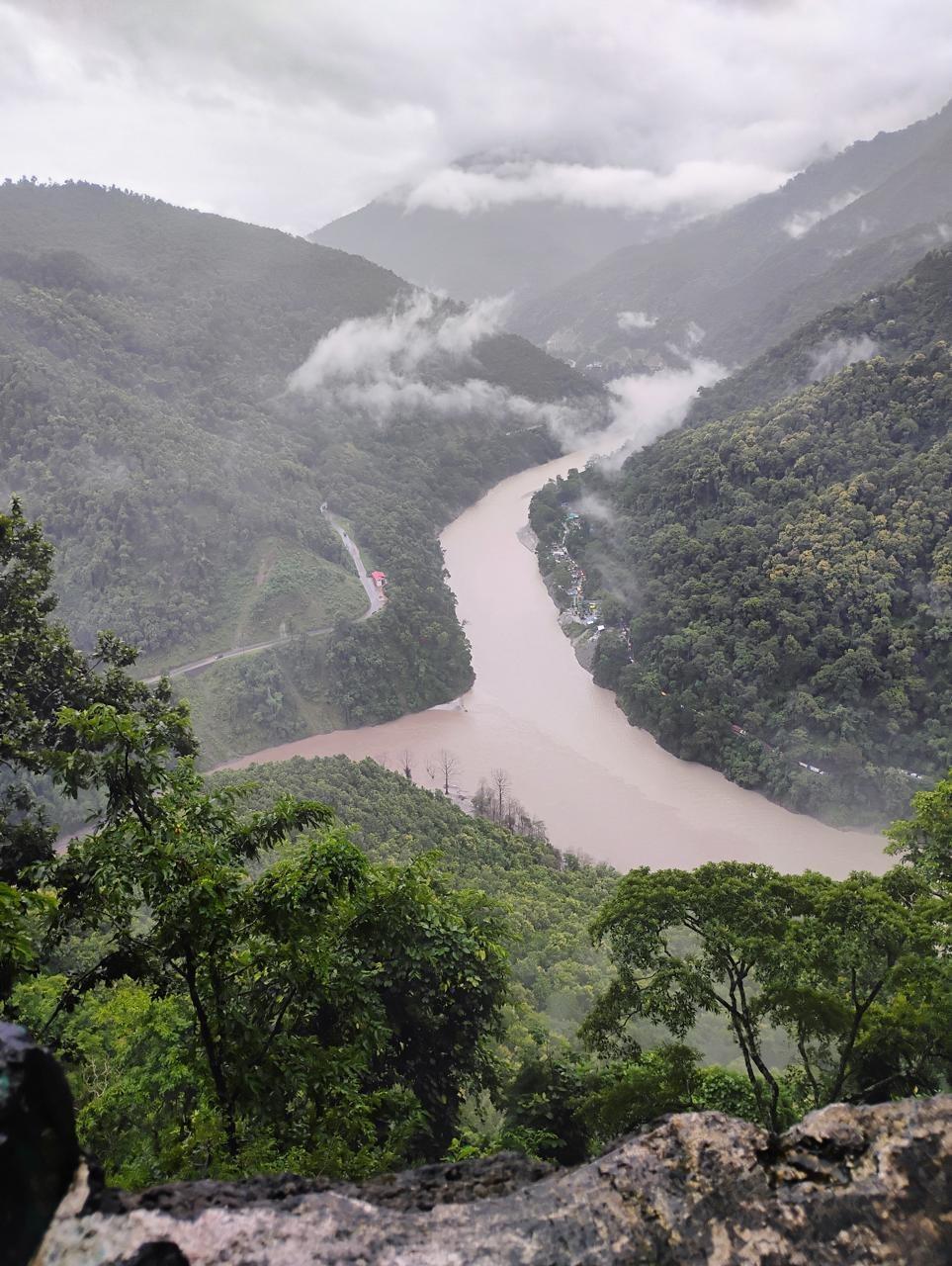
On the roads around here, the views open up without warning. Far below us, a river wound through a deep green valley under the cloud.
This side of the hills is quiet. Small villages nearby, such as Takdah and Tinchuley, have tea gardens and homestays. They suit people who want a night or two away from town.
Mirik
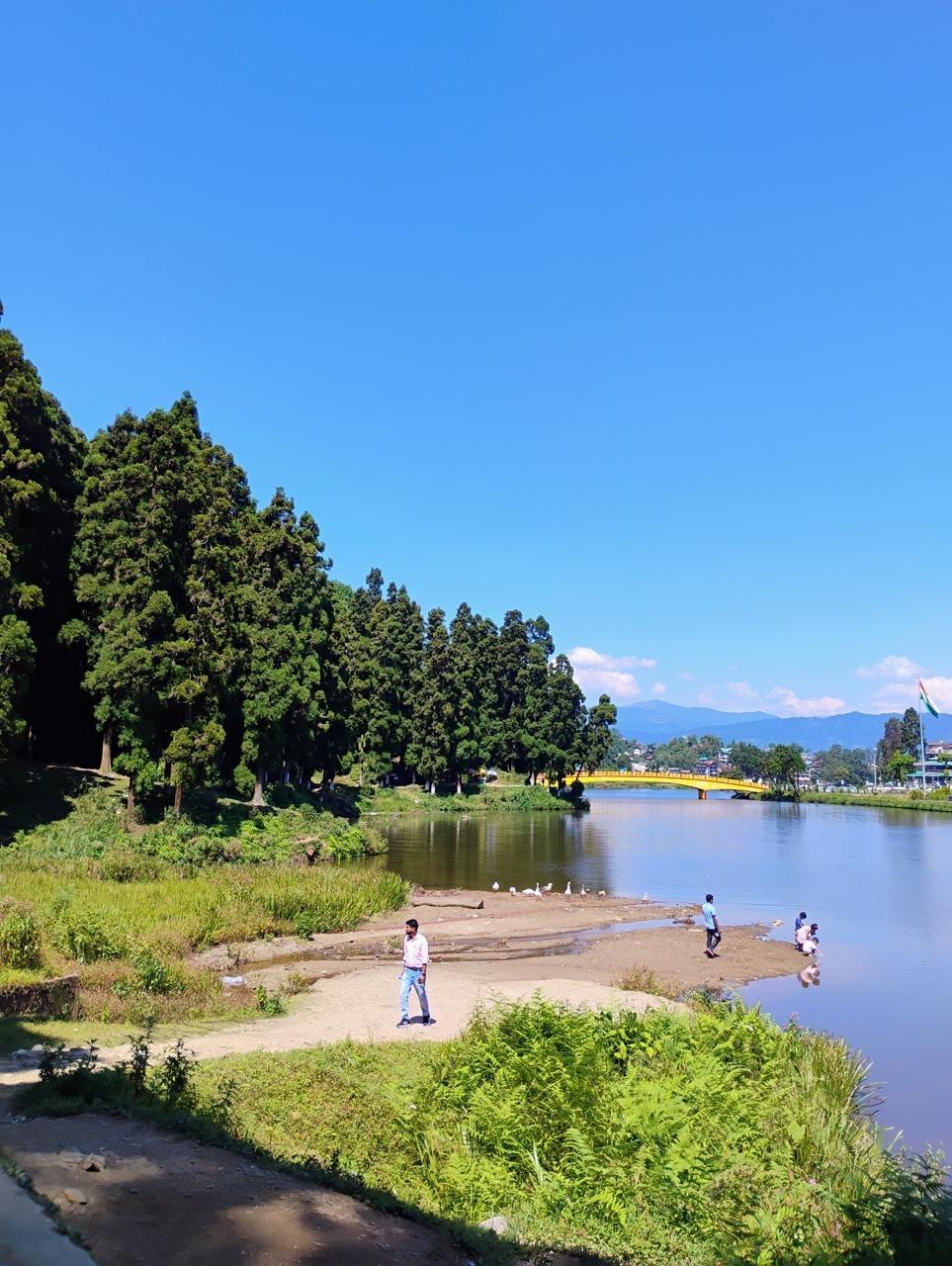
Mirik is a lake town in the Darjeeling district, lower than Darjeeling, with tea estates around it.
The lake is called Sumendu. An arched footbridge of about 80 feet crosses it, and there are paddle boats. A path of about 3.5 km goes all the way round the water.
The lake is newer than it looks. The ground here was once a marsh, and British officers played polo on it. In 1969 the state tourism department began to take over land from the Thurbo tea estate. The lake and its park opened in April 1979.
A flower garden lines one side of the water, and pines line the other. Above the town, Bokar Monastery sits on Mirik's highest point. Thurbo, Gopaldhara and Singbulli are among the tea estates on the slopes around.
How to get there
From Guwahati and most of India, there are two ways in. You can fly to Bagdogra, near Siliguri, or take a train to New Jalpaiguri (NJP). Trains run between Guwahati and NJP.
From either, it is a drive up the hill to Darjeeling, on the old Hill Cart Road. Allow three to four hours from the airport.
Lamahatta is a short drive from Darjeeling, via Ghum. Mirik can be done as a day out from Darjeeling, or on the way up or down from Siliguri.
When to go
October and November are the best months. The rain has gone, the air is clear and Kanchenjunga is most often in view. The clear spell often lasts into December.
March to May is warm and pleasant, but the views are less certain. Haze and cloud come in.
June to September is the monsoon. About four-fifths of Darjeeling's rain falls in these months. The hills are at their greenest, but landslides can close roads and stop the train.
Tips for the trip
If you want to go
Darjeeling, Lamahatta and Mirik fit well into one short trip. Lamahatta and Mirik are each a day out from Darjeeling, and Mirik can also be reached from Siliguri.
For more on the town, the toy train and Kurseong, read our Darjeeling and Kurseong guide. To plan your own trip, tell us on Plan My Trip.

About the writer
Shrawani
Shrawani is an avid traveller. She writes about the trips she takes, in India and abroad.